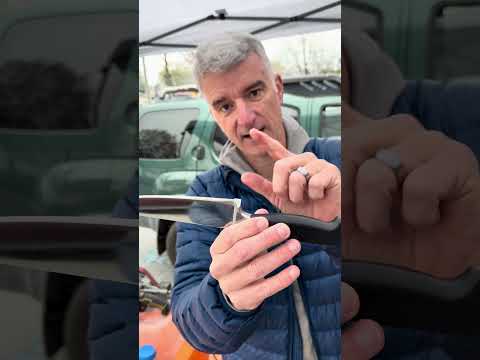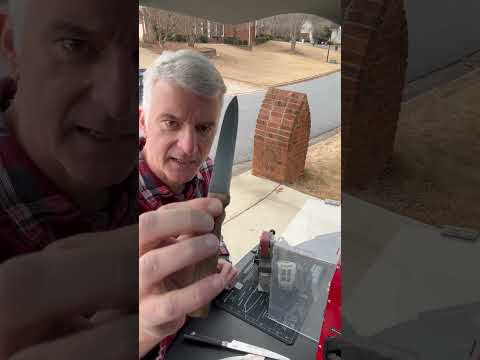
Two ways to remove chips from Brian’s dull knives.
Let us bring sharpness to you
Mobile knife sharpening serving Atlanta and the surrounding areas. We come to you, or catch us at a farmers market.
A friend’s kitchen knives came in with some gnarly chips along both edges. Rather than fix them the same way, Nate takes each knife down a different route so you can compare the two approaches.
Hello everyone. Nate here with SimplySharp. And uh today these are my friend Brian’s knives. Um and as you can see if I can you see this edge is pretty chipped up. Um there are some KI. Um yeah, both of them have got some pretty gnarly chips in them. Uh so I’m actually going to fix these two different ways. Both of them are going to be on the Work Sharp. Um, and just because I bought this thing, I’m going to use it and see how we can do. So, we’re going to come in and uh All right, let’s see. Let’s just pick one of these. All right. How dull is Brian? So, that didn’t even cut. It actually just ripped the uh the thread out of this little thing. And that was at 733 grams. Um it’s dull. Uh this knife is a disaster. We’re going to get it fixed up. Um and we’re going to do this a couple different ways. So, um first thing I’m going to do, so let’s just There we go. 733. All right. First way is we can actually use uh just the the belt and just kind of grind it um off and then put a new edge on it. And what I will do with this guy is I’m going to just put it about that little middle position just to give me a little bit more of an area in here. And we’re just going to grind this right off. Heat. Heat. So, I am using a worn P120, which causes this to take quite a bit longer, but I don’t want to mess up a uh perfectly good belt while doing this. So, I always kind of keep a shameful amount of uh worn P120s. Um, this actually doesn’t produce that much heat. Uh, I’m on the second speed level here. Sometimes I’ll go faster if I think I need to, but uh, doesn’t really build up a whole heck of a lot of heat. I do have a spritzer bottle if, uh, if it becomes an issue, but I’m always just kind of feeling it like it is just barely warm. Um, so yeah, it’s just kind of All right. So, what I’m looking for, and I can still see it. I don’t know if it’s showing up on the camera. There is still a little bit of a chip in there. I want to get that to where I just can’t really see that one anymore. Uh the sharpening is going to take some additional metal off. But what you will often find is a lot of times when you start to put an edge back on it, uh you’ll start to see chips again that you couldn’t see previously. So, I think it just makes sense to just go ahead and and um get that until it’s gone because I’m kind of confident some more are going to pop out of it. I am trying to move around laterally on the uh the belt. So, you know, this way and that. Um, so I’m not just wearing out the same portion of the belt. Still a little bit more to go. Um, maybe like a little bit under medium pressure. Like I am definitely exerting exerting a little bit of pressure here. Not a lot, but more than I normally would uh when just sharpening. Okay. All right. I don’t see any of those anymore. So, I’m going to get this guy up to 15°. Still on level two here. And then I am going to start to get an edge back on it. Uh, and I’m going to use a decent amount of pressure. All right. So, at this point, I’m going to do an inspection. And in fact, I don’t really see any additional uh chips kind of starting to form here. So, um, we’ve got no edge. Um, I might actually normally give this a few more passes, but this poor belt is, uh, is really quite worn out, so it’s going to take a while. Um, this process, especially with a worn belt, like this kind of putting an edge back in, this is absolutely going to build up heat. This note got not even close to hot to the touch. But, you just need to be aware because it can go from, oh yeah, that’s not really hot to, hey, that’s really painfully hot in a surprisingly short amount of time. um minimal number of passes. Flipping it over, that gives the blade a chance to cool. There’s a decent amount of metal in here, so it’s going to obviously um uh diffuse heat through here uh pretty well. Um obviously, a smaller knife is going to be much more prone to this, and you’re definitely going to want to spritz those down uh when you’re doing something like this. Um all right, so I’m going to put this guy aside for a second, and I’m going to show you the other way I do this. um might be a little ambitious for the state that this belt is in, but we’re going to find out. So, these chips right here, not quite as egregious as what we had previously. Not the best focus job there, but they’re there. Um I don’t know if they show up really well on the on the black, but there’s some there and there and there. Um, now the other option if they aren’t a really um deep chip, another option is I will take the angle down to like 25. And then I’m going to do several passes till I get that chip out at 25. And then I’m going to bring it back up to the angle I want to put in. Again, a pretty decent amount of pressure. All right. So, just a little bit still in this one. Little bit. Couple more up here. So, maybe another few passes. Let’s go a bit more. All right. It’s like getting an ed uh a working edge in Okay. So, just kind of still I mean warm, right? But not hot. Um and I don’t see that there seem to be any more chips in here. So, I think we’re in good shape. I think we’ve got those all out. Now, the reason I do this is uh number one, I feel like it’s a little bit more of a benign um repair than just grinding that um that edge right off. And then uh number two, this can happen a lot more quickly. So, if if um if that’s what I was going to do, I actually wouldn’t have used this this worn out shot P120. I would have used just whatever the the P120 that I’m sharpening is. Drop it down to 25. get that chip out, bring it up to the angle that I want the edge at, and then sharpen it as normal. So, it is a little bit uh quicker that way. So, uh what I’m gonna do now is just finish putting an edge back on these knives and get them sharpened, and then we’ll see how we did with them. Um I am going to switch it up to the P120 I’ve been working on. So, this um one of the things I like about these uh these belts, so these are Cubatron P120s. Um, I get a lot of knives out of these belts. Um, almost certainly north of 100, probably 120, 130, sometimes even probably closer to 150 knives, just depending on what’s happened to the belt. But, um, I get a good amount of, um, uh, sharpenings out of each P120. Uh, this one, I was pretty busy this weekend uh, or Sunday. Threw it on. been kind of doing a few appointments. So, this is probably in like the hundred uh knives range. So, it’s getting ready to be retired. So, I’m already starting to feel a burr come up. Um, I’m going to may just give it another couple passes here. And uh if if those of you that uh um are wondering what I’m doing here, uh the burr is grabbing my fingerprints. Um so if you’re, you know, starting out in sharpening or just wondering what I’m doing, I’m just making sure that I can feel it grabbing my fingerprints. Um we’ll see this in a little bit, but you know, another test for a burn is just a microfiber cloth. like it’s not going anywhere. Like that is stuck to that knife. The bird is catching it. This is something that we’re going to use in a in a test in a minute. Let me go ahead and get this guy good. This is again uh pretty light pressure. I’m not really putting a lot of pressure uh on here. Um and I am still at that kind of second highest speed. I will often bump the speed up if uh I mean depending on the knife. Like some of these knives are pretty dang stubborn and so I don’t want to be here for 10 minutes sharpening the same knife. I might bump the speed up. When I bump the speed up, you need to be cautious about your heat. Just keep that in mind. I will say that a brand new fresh Cubatron on. Probably would have had this edge cut in in the first couple of passes, but a That blade is warm but not hot. I think we’re getting there. The uh the light is also a sign of the bur. Uh you can you can usually see it. Although sometimes it’ll uh psych you out, which is what it did there. I thought I saw that bird coming up. Could not feel it. Now, right there, I can feel on my thumb that it’s not hot, but it’s starting to get warm enough that I’m starting to think about it. Um, so usually you just let it off for a minute. um you know, let let maybe your fingers or hands absorb a little bit of the heat. Um that’s an option. We can also spray it down if we need to, but again, you’re just staying in front of the problem. Not hot at all, but again, it is amazing how fast you can go from warm to very hot, especially as these belts wear down. And I’m going to bump this up a smidge. There it is. All right. Now I see it kind of coming in and out. Not sure if that is showing up on the camera or not. You can pretty much see that bur almost all the way. And there’s a couple spots here in the back and then we’re going to be done. that throw this guy. Let him cool down. So again, warm like warm. I don’t know what the temperature is. I’m going to guess under 90. Um, but it it is warm. Um, never even got close to hot, but you just got to stay on top of it. Um, and it’s an A30. This is going to be my refining step. This belt will absolutely heat a blade up. So, this is pretty low pressure. Anyone kind of new to what I’m doing here, this is uh just a step that is doing two things. It’s refining the scratch pattern that the 120 grit P120 put into it. Um and working the burr back and forth. That’s going to help us with our burr removal. This belt is, I believe, around 800 grit. This is where I stop for kitchen knives. Um, I think this leaves enough tooth in the knife that it is very effective uh cutting through food. You can obviously go higher. I personally never really ever go much higher than an A30, but you could go like an A16 or something that will get you like the, you know, 1,00 1200 grit area. It’s a nice edge as well, but I think this is the sweet spot. And again, I’m just doing some refining. Um, my eyesight’s still good enough. I can see the scratch pattern. I can see the burr getting worked back and forth. Um, I’m just kind of looking for that. If I had a rule of thumb, I maybe do like six to eight passes per side somewhere in there. Um, and then it also kind of comes into play like how extensively I had to to um to repair the knife. If I really had to to do something egregious, you might need a little bit more refining in there. Um, uh, just to really help that edge out. This is a felt stropping belt. uh some blue compound. I like the blue compound because I find it provides the best um balance between not gunking up the blade and burr removal. It makes a horrendous mess though. It is a very very messy compound. Um be aware of that. But I like it. Uh it only other downside is it does not work very well in cold weather. So, if you’re in a spot where cold weather is going to be a concern, uh you’re going to want to find a way to keep that compound warmed up. Uh if it’s really cold and I wasn’t able to keep the compound warm, uh I’ll switch over to the green, which I like because it does a great job for removal. It’s fast. It’s effective. It leaves a mess, though. All right. So, at this point, I think I probably still have some bur to remove on this knife to be honest, but I just want to show you. Um, other than a visual inspection, which, you know, I can I actually see it now. The light’s hitting the right way. Cutting paper will give me feedback on whether or not I still have a burr. Um, I can kind of feel that drag. You can hear it. But, uh, this is my my go-to. And it this should slide. And it’s not right. It is definitely grabbing. So, I have bur on there I need to remove. Huh? See that? Nice and smooth. That’s what we want. So, this one you you might not be able to see it, but I can feel it. I can feel there’s still some drag in there. A little bit right in there. All right. What were we at? 773, I believe. I don’t even remember which one we tested, but up. Okay, here we go. Ready? 129. So, that is a massively sharper knife. Just ripped thread out before. 129 right now. This is going to be so much better. Chips are ground out. Um, there you go, Brian. You’re going to love these knives.