July 20, 2026
Let us bring sharpness to you
Mobile knife sharpening serving Atlanta and the surrounding areas. We come to you, or catch us at a farmers market.
Not every damaged knife needs to be replaced.
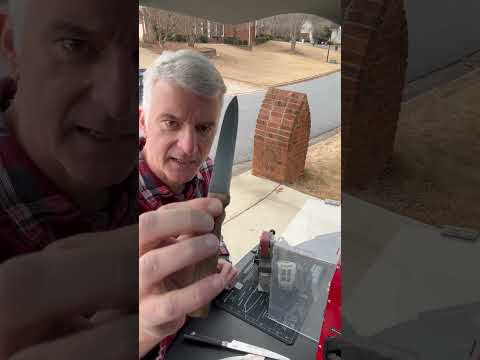
In this video, I repair this damaged chef’s knife along with several other common types of knife damage that I see every week. Whether it’s chips, broken tips, worn edges, or other issues, I’ll walk through how I approach each repair and explain the thought process behind it.
If you’re another sharpener, I hope you pick up a few techniques that you can use in your own work. If you have questions about anything I do in the video, feel free to leave a comment. I’m always happy to help other sharpeners learn and improve.
If you’re one of my customers (or thinking about becoming one), this video also gives you an idea of what’s possible. Repairs like these are included with my standard sharpening service whenever possible—there’s no additional charge. My goal is always to return your knives in the best condition I can so they’re ready to get back to work.
If you enjoyed the video, consider subscribing for more knife sharpening, repair, and edge geometry content.
📍 Atlanta-area customers can learn more or book an appointment at:
Thanks for watching, and happy sharpening!
All right, everyone. Nay here with SimplySharp. It has been a minute, but I just got a bin of knives. And as I go kind of through some of the knives, there’s going to be uh kind of a lot of different examples of repair work that we can do. And um we’re going to do this repair work on the Ken Onion. Um subscribers to the channel will recognize it. I do have a lot of other pieces of equipment. Truth be told, um, one of the 1x30s like the the, uh, the Vaver would definitely do this a lot quicker. Um, but this is what, uh, I just love this tool and, um, it works for so much stuff. So, we’re going to go through some of the different things we’re going to do. This guy, he’s got some chips in the edge. We’re going to work on that. Um, that has a chip in the edge. We’re gonna work on that. Let’s see what else we got in here. We’ve got uh busted tip and some chips. I don’t I know how well you can see those, but there’s that. Let’s see. More just kind of jacked up edge broken tip. And I I mean, I’ve definitely seen this knife have kind of like a a whatever the heck you call it, like a super recover. I’ve I’m not familiar with this pattern at all, so I don’t really know exactly what has happened to this knife. Um, but we’re going to work on it. Cool knife. Nothing really wrong with it. Very, very cool knife. All right, let me got number of pocket knives as well. And uh so far I’m just looking at throw these pocket knives. They don’t seem to really have uh any extensive damage. Um seems like they’re belt. So, we are going to get started on all this. I’m going to show you how to uh how to do all this using the can onion. Um do all this repair work and then I got a bunch of sharpening to do. All right. Um viewers will also recognize that I don’t have my dust collector today. So, oops. Try to catch as much in here as we can. Um so, let’s go start with this guy. Um, this is an exercise of just kind of working the spine. So, if you haven’t seen one of my videos on this topic before, we don’t want to change this edge geometry. We want to avoid that as much as possible. We want to work on the spine. That said, I’ve got a lot of chips in here and here and here that I got to work on. So, we’re going to grind those out first and then see what’s left to do. As always, this is a Cubatron P120. Most of the chips are out. Got a little bit more to go. All right. So, looks like visually almost all the chips are out. There’s got a couple more here. Um, actually at this point I’m going to try to put an initial edge on here because a lot of times that will reveal that the chip is or is not gone. And if there’s just the slightest little bit left, the act of doing that sharpening will remove the rest of it. This is an exercise as much as possible as minimizing how much metal we have to take. So that’s how I’m going to that’s how I’m going to go about it. So, I believe I have got the chips out. Got a little bit of tip repair left to do, but that’s quite a lot less than I had before. Uh, also important in this process is going to be some water to help cool things down. start like this and then we’re work our way back. That way it makes it as easy as possible to uh not have a weird uh edge or angle at the front of this. So because if you come in like this, which is the normal way, you’ve got that and now you have to round it out. And sometimes you miss what’s going on at the very very tip there. So I start like this and I work my way back. Looks pretty good. Um, normally I have to do that a few times, but I’m actually pretty happy with that shape. I’m just going to stop there. All right, this guy See if that focuses well. We’ll see how we can do with getting that big guy out there. All right. So, that is looking quite a lot better. And I didn’t have to do anything off the spine. The the act of grinding that edge. Oh, actually I still see a little bit. Just caught it. Just caught it. But the act of grinding that edge is uh what gave us our nice tip back. I am using a fair amount of pressure when I do this. Uh quite a lot more than I would typically do when sharpening. Most important thing to really watch out for here is heat. See how well this shows up on camera, but I mean that is gruesome. I’m kind of going back and forth across the belt to avoid just really kind of wearing down one same spot because I just go like this up and down the same spot on the belt. That part’s just getting worn out. Um trying to use all the abrasive I can across the width of the belt. That’s why I’m doing that. Um, also just feeling for heat, right? Uh, grinding it like this actually doesn’t really build up all that much heat, but I’m always just trying to stay on top of it. That’s not looking great, but let’s see what happens here. This part definitely generates a lot of heat. Big knife though, so it doesn’t heat up that fast. So, a decent size tip there, there, and there. We got more work to do. I’d have done it. Nope. So, that is an exercise. That’s kind of why I do that little sharpening step. Sometimes there’s a little like rust spot or something in the edge, especially these uh thinner knives here. And um when you it looks like it’s ground off and as soon as you sharpen it just kind of evaporates and leaves a void. And um just something that we just have to deal with. I mentioned I am in Atlanta and it is getting hot today. There is no shade at this customer’s house. All right, that did it. Let’s work on this tip. Now, these knives normally have a tip well, you know, pretty uh acute angle. We want to do that acute angle. We got to take quite a lot of metal off. To me, it’s just kind of a judgment call of how much I’m interested in taking off versus the aesthetic. So, we’re going to see how this goes. Um, this does build up quite a lot of heat and all that heat is concentrated where there’s not a lot of metal. So, we’re going to be very careful about that. Um, so this is like very cool to the touch. Like it can be hot. It can be warm. Um, but this is cool to the touch. Obviously, it should not be painful. Painful. You are getting it hotter than you probably want to. All right. Yeah, I’m reasonably happy with that shape. So, I’m going to stop there. So, what’s getting me about this knife is I I seen it, but this right here, this is just bothering me. And I don’t know if it came like that. I don’t really feel like it did. Let’s see what happens with just a an aggressive grind here. So you can see it kind of took that kind of harsh angle out of it. And now this is more similar to the shape of this knife that that I’m more used to. Um I do still have a pretty goodiz chip here that I need to get out. This is a small knife. That was a pretty decent amount of pressure I was using. So this builds up heat pretty quick. So we’re going to make sure we’re careful. Small knife, lots of pressure. grinding like that, uh, you really got to watch your heat. Okay, now the tip is not quite as pointy as I want it. I could just come off the spine a little bit, but I’m just going to give it one more kind of pass at the front and lighten up just a little bit as I get through the knife. Yeah. So, we’re going to just do a little hit. That’s it. All right. this bad boy. Now, because of the geometry of the knife, uh, I’m going have to bring it down to here, which means that now you see how thin this is. Well, it’s never going to be that thin again. If I was a better sharpener, what would happen is this would get ground off and then this knife would be thinned. So the edges here would get thinned out so that this area down here becomes thinner so that it performs the way this knife was originally designed. I don’t know how to do that. I’m not set up to do that. I haven’t started my journey for that sort of service. I have told the customer about this and he’s perfectly fine with it. I think anyone’s going to be pretty thrilled to get that back anyways. So uh if people are really into their knives, probably worth expressing that to them. Uh, I haven’t really ran across too many customers that uh have had a problem with it. Here we go. You do need to actually, as big as this is, you need to be careful that you don’t like kind of get caught right there because that’ll it’ll definitely try to pull from you and it’ll definitely possibly do some more damage to the knife. So, be very mindful really trying to pay attention in that area. Now, this is going to be so much grinding, heat is going to start being an issue. Not really. It’s just warm right now, but I’m just going to stay on top of it. also be a good time to do a PSA. Um, I don’t have my uh what you call it dust collector. I also didn’t bring a mask with me. Um, I should be wearing a mask. 100% you should be wearing a mask. Uh, I am actively trying to manage a little bit of my breathing though, for whatever that’s worth. But yeah, this not doing a great job with my preparedness today. But this just the way the day has gone. Monday, it up to Monday. We are removing so much metal that we can actually really alter the shape of the knife. I’m doing my best to maintain its existing profile. If the customer really wanted, you should choose to alter that. Now’s your moment because you are really, really getting into this poor guy. I asked what had happened to this knife. Customer indicated nobody fessed up to it. Clearly could have been like some sort of hard chopping motion. Could have hit like a chicken bone or something like that. But a lot of times these shins I don’t know if that’s what happened in this case. They are prone to having these sorts of chips when they get torqued. So, twisted inside of a a harder piece of food like a root vegetable or something, sweet potato, maybe. Um, I don’t really think that’s what happened here, but it is a a mode of how these things tend to get damaged. getting there. Mention it’s hot today. This belt is also getting quite worn out. So, it’s kind of a judgment call on to when you want to. So, that was a used belt already. So, that belt probably already had about 50 knives on it. Um, so I’m not going to throw a new belt on here unless I just really wanted to plow through this. You know what? Actually, why did I not do this? I got these new belts. I hope I brought them with me. Let’s see. Let’s see. Let’s see. Oh, yeah. Okay. I mean, this is going to trash this belt, but I got this new belt, Cliff. It’s his new Bora or something like that. I haven’t even tried this. I’m kind of curious if this is even going to work in the Work Sharp here. Let’s see. This is pretty stiff. The tracking is it might be so stiff it’s just messing with the tracking. Oh. All right. So, this is a P60. I should have done this a second ago. Let’s see what happens. Very light touch. Have some chatter. See if that smooths out a little bit. is doing a job though, that’s for sure. I’m barely touching it. A little more pressure. Not that hot either. Doing a pretty good job with the with the heat. It’s one of the reasons I like the uh drrons. Oh man, I should have started with this thing. Thanks, Cliff. Come out here. That real close. Dang close. Wow. All right. So, there you go. If you were thinking of trying out the I think they’re called Bora, some of that. It’s P P60. Uh let’s try the P120. I got to put an edge on this bad boy. So, see how that works. A lot of times with these really stiff belts like this, the Work Sharp is not going to engage right off the bat. You kind of got to give it a give it a head start. All right. Um, that’s it. The rest of this is sharpening. Just uh sharpen them the way I would sharpen them without having to do all that repair. But yeah, I think I think we did a pretty good job. Got all the tips repaired. Everything’s pointy. All the edges are nice and cleaned up. Um, geometry looks better. Yeah, we basically got a reinvigorated knife here. There we go. I hope that is helpful, if not interesting. And uh, good luck out there, everyone. Bring your dust collectors and or masks. I have definitely made a mess. Getting the car cleaned after this.